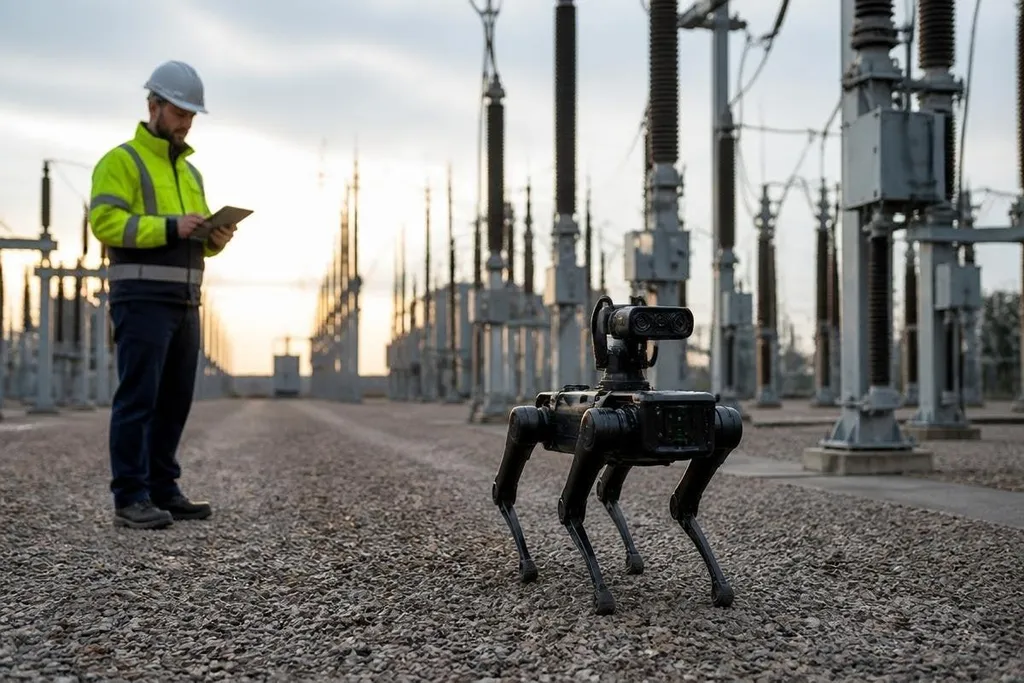
Energy sites cover large areas, contain high-voltage equipment, and can expose workers to heat, gas, fire, or radiation. Robots are becoming more useful because they can collect information in places where a person may need protective gear, a shutdown, or a long trip to reach the same spot.
- Inspection: cameras, thermal sensors, and gas sensors can check equipment without sending a worker into every area.
- Remote work: operators can guide a robot from a safer control room when conditions change.
- Repeat checks: the same route can run again, making changes easier to spot over time.
The work energy robots do
Most energy robots are inspection tools with wheels, legs, tracks, or a flying frame. Their job is to gather data from equipment and send it to a person who can decide what to do next.
A ground robot may carry a thermal camera to find hot electrical connections. It may also carry a standard camera, a microphone for unusual machine noise, or a gas sensor near pipes and valves. A drone can inspect power lines, wind turbine blades, and tall structures without a worker climbing them.
The robot does not need to repair every fault to be useful. Finding a hot bearing early can help a maintenance team plan a shutdown instead of waiting for a larger failure. That link between inspection data and a repair decision is where the value sits.
Why the need is growing
Energy equipment is spread across power plants, substations, pipelines, mines, ports, and offshore sites.
A worker may spend much of a shift reaching an inspection point, setting up safety controls, and walking back out. A robot can cover the same route while the operator stays away from the hazard.
Repeat work also suits automation. The same machine can return to the same transformer, valve, or turbine at set intervals. Its camera can record the same view, while thermal and sound readings give maintenance teams more than a visual check.
The data still needs context. A warm motor may signal a fault, or it may be operating under a higher load than during the last visit. Robots collect the evidence; people connect it with load, weather, maintenance records, and plant rules.
For an energy manager weighing an inspection robot, the useful record starts with the site, task, sensor, weather, and test date. Robot24.com energy robotics coverage can tie those details to the machine and its measured result, so a clean demonstration doesn’t get mistaken for a system ready for heat and dust.
Where the limits show up
Energy sites are hard places for machines. Metal structures can block radio signals. Dust, rain, steam, glare, and poor lighting can affect cameras and sensors. A tracked robot may cross rough ground but struggle with stairs, loose gravel, or a narrow service path.
Battery life also sets the work window. A robot that spends too long driving between inspection points may collect less data than expected. Charging, battery swaps, network coverage, and safe recovery after a fault all need a plan before regular use begins.
Autonomy has limits too. A robot may follow a mapped route and stop when its sensors detect an obstacle. A person still needs to review unusual readings and decide whether the machine should continue. Remote operation can help, but it depends on a stable link and a trained operator.
I’d fund inspection robots before general-purpose humanoids because energy sites have clear tasks, known routes, and measurable readings.
A buying checklist for energy teams
Use these questions before choosing a robot for a plant or field site:
- Name the hazard: voltage, heat, gas, height, water, radiation, or moving machinery.
- Set the route: list stairs, doors, slopes, narrow paths, and areas with weak network coverage.
- Choose the sensors: match thermal imaging, gas detection, sound recording, visual cameras, or LiDAR to the fault you need to find.
- Check recovery: decide how staff will locate, stop, recharge, or retrieve the robot after a fault.
- Define the handoff: state who reviews the data and who can order a repair or shutdown.
- Measure the result: compare inspection time, missed faults, repeat visits, and worker exposure before and after deployment.
That last measure matters because a robot project can collect more data while adding work for the maintenance team. The useful system is the one that turns sensor readings into a clear decision without adding a second manual process.
Energy robots will keep gaining ground where inspection is repeated, risky, or spread across a large site. The next test is practical: can each system complete its route, return safely, and give a technician enough evidence to act?